My First Paid Project Was Vibe Coded. Here's What I Learned the Hard Way.

Spring 2025. I had just graduated with a software engineering degree into one of the worst tech job markets in recent memory.
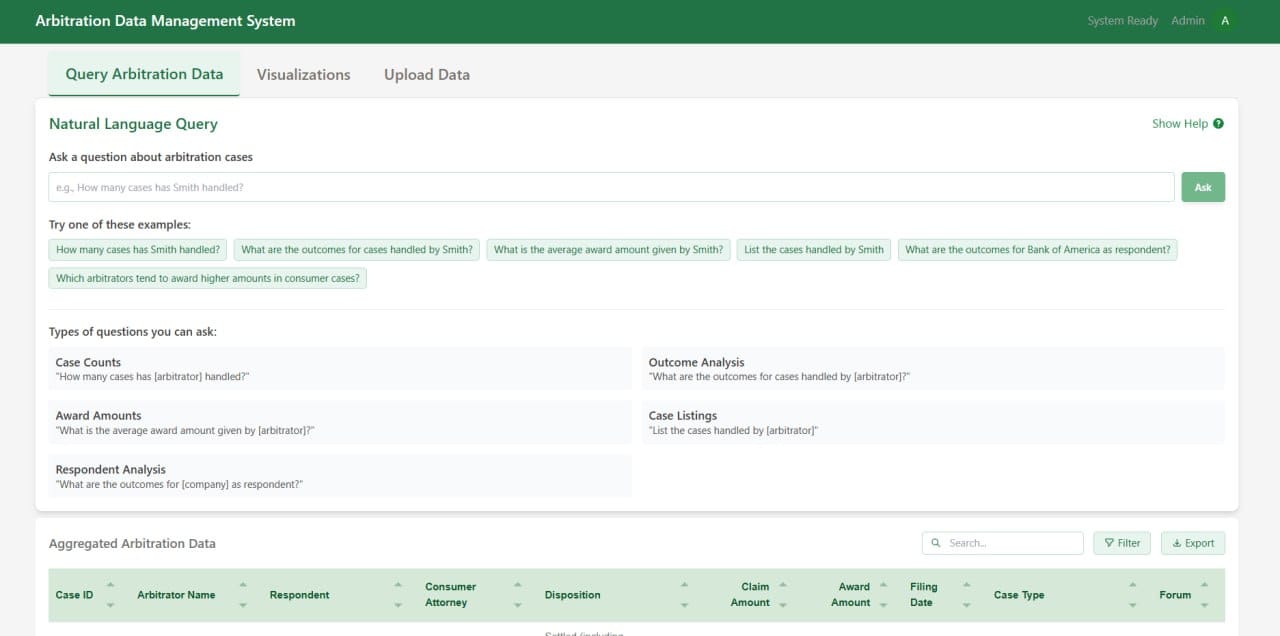
My brother works at a law firm. Their usual developer was tied up on another project. His boss had a request: something specific, something that sounded simple on the surface: he wanted to talk to his data. Ask questions like "How many cases did John Smith win this year?" or "How often did Judge Jones rule in favor of the defendant?"
The underlying challenge was real. Dozens of Excel files. Years of case records. No way to query across all of them without opening each one manually and hoping you remembered to check the right column.
My brother asked if I could build it.
I said yes.
The Idea
I had a clear architecture in my head almost immediately. Take the Excel files, aggregate them into a SQL database. Build a file upload system so new records could be added cleanly. Then connect the database to LangGraph and wire it to the OpenAI API: so a lawyer could type a plain English question and get an actual answer pulled from real data.
|
Get a free copy of The Architect's Advantage shipped to your door. GET THE FREE BOOK →Free copy. Just cover shipping. |
It wasn't a trivial idea. But I understood SQL. I understood how to build applications. And I had something new: vibe coding tools that could handle the parts I'd normally spend days on.
I opened Replit and started building.
Where It Went Wrong
For the first few hours, everything looked like it was working.
Then it started breaking.
A query would return the wrong result. An upload would fail silently. A connection would drop for no obvious reason. I'd fix one thing and something else would stop working. The deeper I went: asking the AI to diagnose, patch, adjust: the more tangled it got.
You see, this is the trap that nobody warned me about. When you're vibe coding and something breaks, the instinct is to fix it. Keep iterating. Ask the AI to find the problem. And it will find something: it'll always find something: and it'll fix that thing. But the context is accumulating. The conversation history is growing. The AI is trying to hold a mental model of an increasingly complicated, increasingly inconsistent codebase. And at a certain point, it's not improving the project anymore. It's patching a sinking ship.
|
Get a free copy of The Architect's Advantage shipped to your door. GET THE FREE BOOK →Free copy. Just cover shipping. |
I spent several hours doing exactly this. Watching the ship sink slower.
The Lesson: Start Over, Not Deeper
The fix wasn't another patch.
It was a fresh context window.
I stopped. Cleared the session. Started from scratch: not rebuilding from memory, but rebuilding sequentially. One feature at a time. Fully working before moving to the next. Controlling what the AI knew at each step so the context stayed clean and the model stayed oriented.
It felt like losing ground. It was actually the fastest I moved the entire project.
First: get the SQL database schema right and the file upload working. Done. Verified. Moving on.
|
Get a free copy of The Architect's Advantage shipped to your door. GET THE FREE BOOK →Free copy. Just cover shipping. |
Second: connect the database query layer. Done. Test it independently. Moving on.
Third: wire LangGraph to the database. Done. Test it. Moving on.
Fourth: connect OpenAI. Done. Run real questions against real data.
The whole thing came together in less than two work days: start to finish. The client still uses it today.
What Vibe Coding Actually Requires
Vibe coding isn't just prompting your way to an app. The tools are extraordinary: but the discipline has to come from you.
|
Get a free copy of The Architect's Advantage shipped to your door. GET THE FREE BOOK →Free copy. Just cover shipping. |
The skill isn't knowing how to use the AI. The skill is knowing when to stop trying to fix and start over. It's knowing how to break a problem into a sequence that the AI can hold without losing the thread. It's knowing what you're actually building before you start building it.
I had an architecture in my head before I wrote a single prompt. That architecture is what saved the project.
A year later, the tools have caught up to what that project needed. Replit just released Agent 4: their fastest, most capable agent yet. Parallel agents now tackle auth, database, back-end, and front-end simultaneously. Agent 3 could already run for hours independently, self-testing and fixing as it went. Agent 4 puts creative control at the center: you stay in the building, Agent handles the coordination.
What took me two work days of careful sequencing in Spring 2025 could probably be done in a single session today. Maybe one afternoon.
That's how fast this is moving.
Where to Start
If you haven't tried vibe coding a real project yet, Replit is where I'd start. It's where I still work. Not just for the AI: for the full environment. Build, run, deploy, collaborate, all in one place.
|
Get a free copy of The Architect's Advantage shipped to your door. GET THE FREE BOOK →Free copy. Just cover shipping. |
Use my referral link and you'll get an extra $10 in credits to start:
replit.com/refer/roberttodjohnso
The tools are ready. The question is whether you have a real problem to point them at.
Want more on building systems and using AI to do real work? Subscribe below: one email a week, no fluff.
Get a free copy of The Architect's Advantage shipped to your door. GET THE FREE BOOK →Free copy. Just cover shipping. |